 showtimes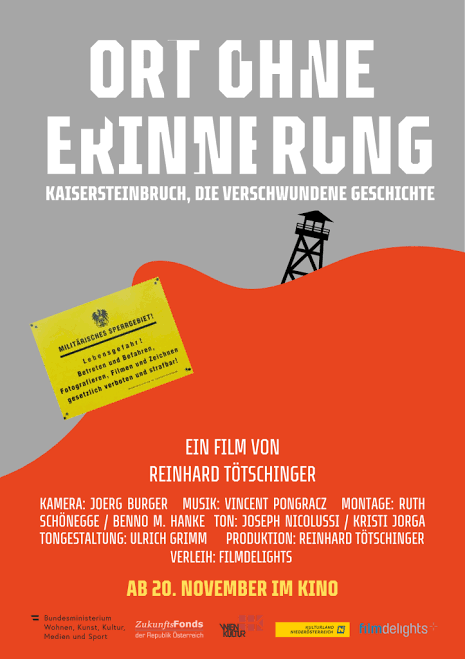
Ort ohne Erinnerung – Kaisersteinbruch, die verschwundene Geschichte
Kaisersteinbruch, an inconspicuous place in eastern Austria. You drive past a wall. A poster advertises "Our Army." A sign reads "Military Restricted Area. Danger to Life." You wouldn't immediately think of one of the largest prisoner-of-war camps of the German Reich that once existed here. The multifaceted and tragic past extends from imperial quarries, whose stones were used to equip castles and palaces, through camps from the world wars to the present day. It lies underground, as isolated wall remnants, fences, and buildings show, covered by a new history that doesn't erase the old one—a place languishing, struggling to survive. People don't talk much about it. Nor about the fact that soldiers from eighteen different nations were imprisoned here, many of them killed or murdered. Today, their descendants still regularly search for remains and visit the cemetery of the former camp. And what became of the women who formed relationships with French prisoners of war? And what of the children born from these unions? When discovered, such relationships meant imprisonment or concentration camps for the women. These family secrets persist to this day and burden those affected. For the residents of the place, the film raises the question of how history is transformed or made to disappear and how it shapes everyday life.